


Denied for a Mortgage in Texas? Simple Steps to Fix Credit and Try Again
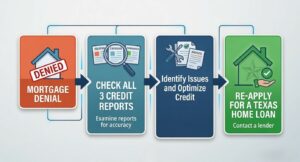
If your mortgage was denied in Texas because of credit, you are not stuck forever. In most cases, you can pull your three credit reports, find late payments, collections, or errors, fix them with credit repair help, and then re‑apply once your score and report look better.
“I was denied for a mortgage in Texas. Now what?”
Getting a “no” from a lender hurts. You may feel embarrassed, angry, or confused.
Here is the good news: a denial is not the end. It is a message that something in your file needs work. When you fix those things, you can often try again and get a yes.
In this guide, we will walk through:
- Why Texas lenders say no because of credit
- How to read your denial letter in plain language
- How to pull and review all three credit reports
- How credit repair helps with wrong or unfair items
- When to call The Credit Repairmen for extra help
Ready to get back on track?
Get Your Free Credit AnalysisTop 3 credit reasons Texas home loans get denied
There are many reasons a mortgage can be denied. But for Texas buyers, three credit problems show up again and again.
1. Low credit score
Your credit score is a number that tells lenders how risky you look. Think of it like a school grade for how you handle debt.
- Late payments can drag your score down.
- Maxed‑out credit cards can drag it down.
- Collections and charge‑offs can drag it down.
Many lenders want a score around the low 600s or higher for common loans, even though some programs allow lower scores with extra rules.
2. Recent late payments
A late payment is when you pay a bill 30 days or more past the due date. Even one late payment can hit your score hard.
Lenders worry when they see:
- A late payment in the last 12 months
- Several late payments in a row
- Late payments on big debts like car loans or cards
To them, recent late payments mean you might also pay a mortgage late.
3. Collections and charge‑offs
A collection is when a bill you did not pay gets sent to a collection company. A charge‑off is when a lender gives up on collecting and marks the account as a loss.
These marks:
- Lower your score
- Make underwriters nervous
- Raise questions about how you will handle a house payment
Lenders may still approve some buyers with older or small collections. But big or recent negative items can be a reason for denial or for a higher‑cost loan.
How to read your mortgage denial letter (Texas edition)
Your lender must tell you why you were denied. This usually comes in a letter or notice.
Look for three key parts:
- Main reasons for denial
This section might say things like “credit score too low,” “delinquent past or present credit obligations,” or “too many recent inquiries.”
These are your main problem areas. - Credit bureau information
The letter should list which credit bureau reports were used (Equifax, Experian, TransUnion) and how to get a free copy.
You usually have a right to a free report after a denial. - Next steps or rights
The notice may briefly tell you that you can dispute information you believe is wrong. This connects to your rights under federal and Texas law.
If the letter is hard to understand, do not panic. You can:
- Call the lender and ask them to explain the reason in simple words.
- Ask, “Is this mainly about my credit score, my debts, or something on the property?”
This helps you know what to fix first.
Step‑by‑step: pull your 3‑bureau reports and spot the big problems
To fix your credit, you first need to see it. That means all three reports, not just a score on an app.
Step 1: Get your three credit reports
You want reports from:
- Equifax
- Experian
- TransUnion
You can get free copies at least once a year, and also after a mortgage denial. Pulling your own reports is a “soft” check and does not hurt your score.
Step 2: Check basic personal information
Make sure your:
- Name
- Address
- Social Security number
- Date of birth
are correct and belong to you. Wrong info can sometimes point to mixed files or even fraud.
Step 3: Look for late payments
Write down any accounts that show:
- 30‑day late
- 60‑day late
- 90‑day late or more
Note when they happened. Recent late payments usually matter more than old ones.
Step 4: Find collections and charge‑offs
Make a list of:
- Each collection account (who, how much, when opened, when reported)
- Each charge‑off account
These are often big roadblocks for Texas home buyers and may need a plan before you apply again.
Step 5: Circle things that look wrong
Look for:
- Accounts that are not yours
- Balances that are way off
- Items that show as unpaid even though you paid them
- Duplicate entries for the same debt
If something looks wrong or unfair, it may be a credit reporting error, and you have rights to dispute it.

Want help reading your reports?
If you feel lost trying to read your reports, you are not alone. CLICK HERE to get a free 3‑bureau credit report review with The Credit Repairmen in Texas, and we will walk through each page with you in plain language.
How credit repair helps challenge wrong or unfair items
Wrong or unfair items on your report can lower your score and kill a mortgage deal. The law gives you rights to fight back, and credit repair professionals can help you use those rights.
Your basic rights in simple terms
Under federal law, and with extra protections in Texas, you have the right to:
- Dispute information you believe is wrong or cannot be proven
- Have the credit bureaus investigate, usually within about 30 days
- Have items corrected or removed if they cannot be verified
If you send more documents during the investigation, the bureau may get up to 45 days to finish.
What a good dispute looks like
A strong dispute:
- Clearly names you and the account
- States what is wrong (dates, balance, status)
- Explains why it is wrong
- Asks the bureau to fix or remove the item
- Includes copies of proof, like payment receipts or letters
You can mail disputes or use online portals. Many people prefer mail with tracking so they have a record.
Where a Texas credit repair team fits in
A Texas‑based credit repair team can:
- Review all three reports and flag likely errors or unfair items
- Help draft clear dispute letters with the right details
- Track responses from bureaus and creditors
- Suggest which debts to pay, settle, or leave alone before you apply again
The goal is not “magic.” The goal is to make your reports accurate, fair, and as strong as possible before you go back to a lender.
When to call The Credit Repairmen for a free 3‑bureau review
You do not have to do this alone. In fact, many Texas home buyers waste months guessing instead of following a focused plan.
You should reach out to The Credit Repairmen if:
- You were denied and your letter mentions “credit” or “score”
- You see collections, charge‑offs, or late payments and do not know what to tackle first
- Your reports show accounts you do not recognize
- You are 3–12 months away from wanting to buy a home in Texas
During your free 3‑bureau credit report review, our team will:
- Pull or review your three credit reports with you.
- Show you which items likely hurt your mortgage chances the most.
- Explain your dispute and clean‑up options in plain Texas English.
- Map out steps for the next 30–90 days so you know exactly what to do next.
Denied for a home loan or scared you will be? Call 210-520-0444 for a free 3‑bureau credit report review with The Credit Repairmen in Texas, and let us show you how to turn today’s “no” into a future “yes.”
When you can try for a Texas mortgage again
There is no single wait time for everyone. It depends on what you fix and how your credit responds.
In general:
- If your denial was just missing documents, you may be able to fix that and re‑apply quickly.
- If it was low score from high card balances, lowering those balances can sometimes help within a few months.
- If it was serious recent late payments or big collections, you may need more time and a clearer plan.
A good rule of thumb: work on your credit for at least 30–90 days, then have your reports and scores checked again before starting a new loan application.
Common questions about denied Texas mortgages because of credit
The denial notice does not show up on your credit report. What does show up is the “hard inquiry” from when the lender checked your credit. One inquiry usually has a small effect, but many hard inquiries in a short time can add up.
Credit repair cannot promise approval, but it can help remove errors, organize disputes, and plan how to handle debts so your reports and scores look better when a lender reviews them. Many Texas buyers move from denial to approval after a few months of targeted work on their credit files.
Sometimes another lender may have slightly different rules, but if your credit issues are clear (low score, recent lates, heavy collections), most lenders will see the same problems. It is often better to pause, clean up your credit with a focused plan, then come back stronger.
You can technically apply again anytime, even with a different lender, but that is not always smart. Most people should first fix the main problems listed in the denial letter, work on their credit for at least a few months, and then re‑apply once they see real improvement in their reports and scores.
Lenders set minimum score levels to manage risk. Many look for scores around the low 600s or higher for common home loans, even though some government‑backed programs allow lower scores with extra conditions. If your score is below their line, they may deny the loan or offer only very strict terms.
Still not sure where to start?
Call us — we'll review all 3 of your credit reports for free and walk you through exactly what needs to happen.
Call (210) 520-0444